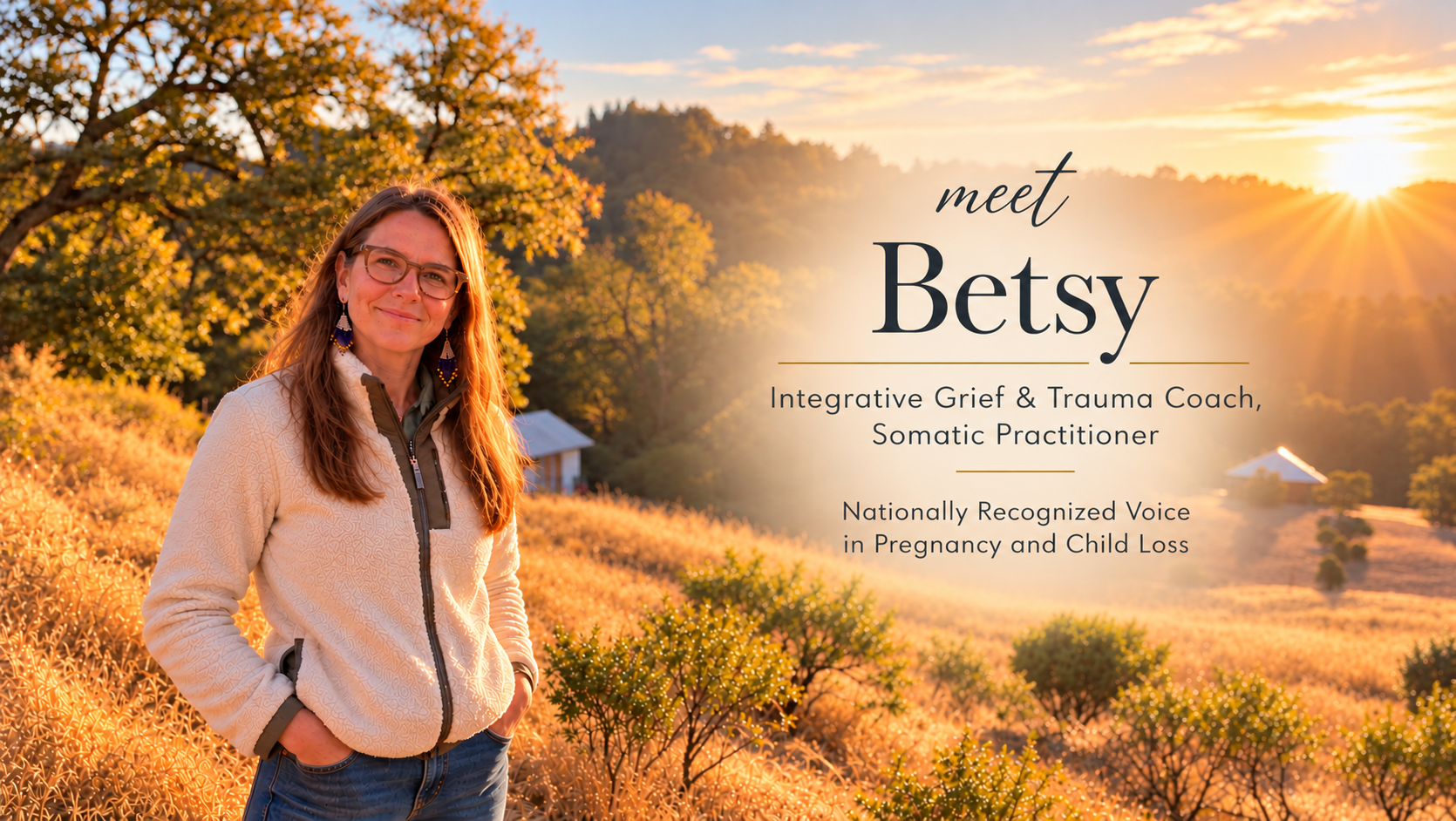
A woman with shoulder-length brown hair and blue eyes wearing an olive green turtleneck sweater, looking directly at the camera with a slight smile in a domestic setting.

I support people through life’s most painful and transformative experiences with compassionate guidance & grounded support.

Betsy Winter— Somatic Coach
Nationally recognized leader in perinatal loss, trauma & bereavement support.

Compassion for what’s been carried in silence.

  • A close-up of a lit candle with a bright flame against a dark background, with out-of-focus warm-colored bokeh lights in the background.

    Grief & Loss

    I support parents and families who are navigating unimaginable loss, loss of loved one, pregnancy and infant loss; including all losses one might experience on the family building journey, helping them learn how to live alongside grief when life has been irrevocably changed.

  • Close-up of two people holding hands, one wearing a gold watch and the other in a gray dress.

    Couples Support After Loss

    I support couples navigating the profound grief of pregnancy and infant loss, helping partners navigate profound loss when both are depleted, grieving differently, and longing to stay connected.

  • Pregnancy & Parenting After Loss

    I support people navigating pregnancy after loss offering guidance and steadiness through unknowns, milestones, medical appointments, and difficult situations. I also support parents as they either welcome a new baby or parent their living children after loss, helping them carry both love and loss and navigate the unique challenges of parenting after loss.

  • Close-up of a water droplet creating ripples on the surface of a calm water body.

    Parenting Support & Guidance

    I work with thoughtful parents who care deeply about raising secure, emotionally healthy children and who sometimes find themselves questioning their reactions, their confidence, or their impact. Together, we build understanding, strengthen connection, and nurture confidence, helping parents trust themselves and feel more grounded, capable, and supported in their parenting journey.

  • Spiral stone viewed from the bottom looking up.

    Trauma & Relational Healing

    I support people healing from many different kinds of trauma and toxic relational dynamics, including childhood trauma, complex trauma, betrayal trauma, dysfunctional family systems, and patterns that have been passed down through generations. I provide a compassionate space for healing and integration, helping people reclaim their power, restore a sense of safety, and reconnect with their whole selves as they move toward balance, resilience, and well-being.

  • Narrow slot canyon with smooth, curved layered sandstone walls in shades of orange, red, and pink.

    Life Transitions

    I support people navigating significant life transitions, health challenges, identity shifts, career changes, relationship transitions, and other major life changes, especially when the path forward feels uncertain or unfamiliar. Together, we explore the full range of grief and emotions these changes bring and work to reconstitute identity, create meaning, and integrate these experiences into embodied life.

Grounded, Somatic Support for Trauma & Loss

Trauma, grief, and life’s difficult experiences are not only in the mind—they live in the body, shaping how we feel, relate, and respond long after the event. Somatic approaches help release these patterns gently, especially when talk alone isn’t enough.

  • Integrative Somatic Trauma Therapy Coaching

    Integrative Somatic Trauma Therapy Coaching is a body-centered approach to healing that recognizes that trauma is not only held in our memories or thoughts — it is also stored in the body and nervous system.

    Many people can understand their experiences intellectually, and still feel stuck in patterns of anxiety, shutdown, shame, or disconnection. This happens because the body learned ways to survive overwhelming experiences long before we had the words or understanding to process them.

    Somatic trauma work helps you gently reconnect with your body, your nervous system, and your inner world so healing can happen at the level where these experiences were first held.

    In our work together, we move slowly and with care, helping you develop a compassionate relationship with your body and the different parts of yourself that formed in response to life’s challenges.

    What This Work May Include

    This integrative approach draws from several trauma-informed and somatic traditions and may include:

    Befriending the Body
    Learning to listen to the wisdom of your body and nervous system. Together we explore sensations, emotions, and inner experiences so your body can begin to feel safer and more supported.

    Understanding the Nervous System
    Using insights from nervous system science, including polyvagal theory, to understand how the body moves between safety, protection, and overwhelm — and how we can gently support regulation and connection.

    Working with Parts of the Self
    Trauma often creates different inner “parts” that helped us survive. Some parts may carry fear, shame, anger, or protection. This work helps you build a compassionate relationship with these parts so they no longer have to carry their burdens alone.

    Processing and Integrating Trauma
    Through somatic awareness, gentle exploration, and body-based practices, we work with trauma memories and survival patterns so they can gradually shift and integrate.

    Embodiment and Movement
    Trauma can disconnect us from our bodies. Practices such as mindful movement, breath awareness, and somatic exploration help restore a sense of presence, agency, and vitality.

    Exploring Shame and the Shadow
    Many people carry deep shame connected to early experiences or relationships. In a supportive and non-judgmental space, we can begin to understand these patterns and bring compassion to the parts of ourselves that have felt hidden or rejected.

    Honoring Personal, Ancestral, and Collective Experiences
    Our individual stories are shaped by family histories, cultural contexts, and collective experiences. This work recognizes these wider influences and honors the resilience and wisdom carried within them.

    What Support May Look Like

    Sessions are collaborative and paced with care. Together we may:

    • slow down and track what is happening in the body

    • explore emotions, sensations, and inner parts with curiosity

    • use grounding and nervous system regulation practices

    • work with trauma memories through gentle somatic awareness

    • support integration so new patterns of safety and resilience can emerge

    The goal of this work is not to “fix” you.


    It is to help your nervous system experience greater safety, connection, and wholeness, and to support the natural capacity within you for healing, growth, and transformation.

  • Somatic EMDR

    Somatic EMDR is a trauma healing approach that combines Eye Movement Desensitization and Reprocessing (EMDR) with body-based somatic awareness. Together, these approaches help process difficult experiences while supporting the nervous system and body to feel safer and more regulated.

    Trauma is not only stored in our memories — it is also held in the body, nervous system, and survival responses that helped us cope at the time. Even when we understand what happened, the body can continue to react as if the danger is still present.

    Somatic EMDR helps the brain and body process and integrate these experiences so they no longer feel as overwhelming or stuck.

    How Somatic EMDR Works

    EMDR uses gentle forms of bilateral stimulation (such as guided eye movements, tapping, or other rhythmic forms of attention) to help the brain reprocess distressing memories and reduce their emotional intensity.

    When combined with somatic awareness, we also pay attention to what is happening in the body and nervous systemduring this process. This helps create a slower, more grounded experience that allows the body to release survival responses and restore a sense of safety.

    Rather than pushing through difficult memories, this approach works at a pace that helps your nervous system stay supported and regulated.

    What This Work May Help With

    Somatic EMDR can support people who are experiencing:

    • lingering effects of trauma or overwhelming life events

    • intrusive memories or emotional triggers

    • anxiety, fear, or hypervigilance

    • feelings of shutdown, numbness, or disconnection

    • stress that feels stuck in the body

    • patterns that continue long after the original experience has passed

    What Support May Look Like

    In sessions, we work together to create a sense of safety and stability before exploring difficult experiences. This may include:

    • grounding and nervous system regulation practices

    • gentle awareness of body sensations and emotions

    • EMDR processing using bilateral stimulation

    • tracking how memories and sensations shift over time

    • supporting the body to release stored survival responses

    The goal of Somatic EMDR is not to erase memories. Instead, it helps the brain and body reprocess experiences so they can become part of your story without continuing to overwhelm your present life.

    Over time, many people notice greater calm in their nervous system, a reduced emotional charge around past events, and an increased sense of agency, resilience, and connection to themselves.

  • Somatic Attachment Therapy Coaching

    Somatic Attachment Therapy Coaching focuses on healing the relational wounds that shape how we connect with others and how we feel about ourselves.

    Attachment patterns begin forming very early in life through our relationships with caregivers. When a child experiences consistent safety, responsiveness, and emotional attunement, their nervous system learns that relationships are safe and supportive.

    When these experiences are inconsistent, overwhelming, or missing, the body adapts in order to survive. A child may learn to stay hyper-aware of others’ needs, disconnect from their own feelings, avoid closeness, or feel anxious about losing connection. These patterns are not flaws — they are protective adaptations that once helped the nervous system cope.

    Over time, these early relational patterns can continue shaping how we experience intimacy, trust, conflict, and connection.

    Why a Somatic Approach?

    Attachment patterns live not only in our thoughts and beliefs — they are also held in the body and nervous system.

    You may notice this in moments such as:

    • feeling anxious when someone pulls away

    • shutting down or withdrawing during conflict

    • struggling to trust or depend on others

    • feeling overwhelmed by closeness or emotional intimacy

    • losing connection with yourself when trying to maintain connection with others

    Somatic Attachment Therapy works directly with the nervous system and body to help these patterns shift. By slowing down and bringing awareness to the body’s responses in relationship, we can begin to create new experiences of safety, connection, and repair.

    What This Work May Help With

    This work can support people who want to:

    • understand their attachment patterns and relationship dynamics

    • feel safer and more regulated in connection with others

    • build healthier boundaries and communication

    • move out of repeating relationship cycles

    • deepen intimacy and emotional presence

    • develop greater self-trust and self-compassion

    What Support May Look Like

    In our sessions, we explore how your nervous system responds to connection, closeness, distance, and conflict. Together we may:

    • notice how relational experiences show up in the body

    • slow down emotional and nervous system responses

    • build capacity for safety, trust, and co-regulation

    • explore early relational experiences that shaped attachment patterns

    • practice new ways of relating to yourself and others

    This work is not about blaming the past or judging the ways you learned to survive. Instead, it is about creating new relational experiences that allow your nervous system to feel more secure, connected, and supported.

    Over time, many people find that as attachment wounds begin to heal, relationships can become more authentic, grounded, and nourishing — with others and with themselves.

  • Item description
  • Polyvagal-Informed Coaching

    Polyvagal-Informed Coaching focuses on understanding and supporting the nervous system, which plays a central role in how we experience safety, stress, connection, and protection.

    Our nervous system is constantly scanning the world for cues of safety or danger. This happens automatically and often outside of our conscious awareness. When the nervous system senses safety, we are more able to feel calm, present, curious, and connected to others.

    When the nervous system senses threat, it shifts into protective survival responses such as fight, flight, freeze, or shutdown. These responses are natural and important for survival.

    For people who have experienced trauma or chronic stress, the nervous system can become biased toward detecting danger, even when the present moment is relatively safe. This can lead to patterns such as:

    • chronic anxiety or hypervigilance

    • difficulty relaxing or feeling settled

    • emotional overwhelm or shutdown

    • feeling disconnected from others

    • struggles with trust, closeness, or communication

    Understanding the Nervous System

    Polyvagal-informed work is based on Polyvagal Theory, which helps us understand how the autonomic nervous system moves between states of safety, protection, and disconnection.

    Rather than focusing only on changing thoughts or behaviors, this approach helps us understand how the body responds to stress and connection, and how we can support the nervous system in returning to greater balance.

    What This Work May Help With

    Through Polyvagal-Informed Coaching, many people begin to:

    • understand their stress and survival responses

    • feel more regulated and grounded in their body

    • increase their capacity for connection and intimacy

    • move out of chronic fight, flight, or shutdown patterns

    • develop tools to support their nervous system during difficult moments

    • experience greater calm, curiosity, and engagement with life

    What Support May Look Like

    In our sessions, we explore how your nervous system responds to different experiences and relationships. Together we may:

    • notice the body’s signals of safety and stress

    • learn practical nervous system regulation tools

    • build awareness of personal triggers and patterns

    • gently expand your capacity for connection and presence

    • support the nervous system in moving out of survival states and back toward safety

    The goal of this work is not to eliminate protective responses. These responses helped your body survive important moments in life.

    Instead, Polyvagal-Informed Coaching helps your nervous system develop more flexibility and resilience, so you can move more easily between protection and connection.

    Over time, many people experience greater access to the states where humans naturally thrive — calm, curiosity, creativity, and meaningful connection with others and with themselves.

    3 messages remaining. Upgrade to Plus to keep the conversation going


  • Item descSomatic Developmental Trauma Therapy

    Developmental trauma refers to overwhelming or unsupported experiences that occur very early in life, when the brain, body, and nervous system are still forming. These experiences can begin before birth, continue through infancy, and unfold throughout childhood.

    Developmental trauma is not only about obvious harm or abuse. It can also arise from experiences that a developing nervous system experienced as too much, too fast, too frightening, or too alone.

    This may include things like:

    • stress or trauma during pregnancy

    • difficult or traumatic birth experiences

    • separation from a parent or caregiver early in life

    • medical procedures or hospitalizations as a baby or child

    • a parent struggling with depression, anxiety, addiction, or overwhelming stress

    • growing up without consistent emotional attunement or support

    • having needs ignored, minimized, punished, or shamed

    • missing important developmental experiences of safety, comfort, and connection

    In the earliest stages of life, babies and young children do not yet have language or conscious memory to process what is happening. Instead, these experiences are absorbed and stored in the nervous system and body. The body learns how to adapt in order to survive.

    Later in life, these early imprints may show up in ways that can feel confusing or hard to explain, such as:

    • chronic anxiety or hypervigilance

    • difficulty feeling safe or settled in the body

    • strong shame or self-doubt

    • challenges with boundaries or relationships

    • emotional overwhelm or shutdown

    • patterns of people-pleasing, self-abandonment, or disconnection

    Somatic developmental trauma therapy works with the body and nervous system, not just thoughts about the past. Together, we gently explore how early experiences may still be living in the body today and support the nervous system in learning new patterns of safety, regulation, and connection.

    Many people seek this kind of support when they sense that something deeper is shaping their reactions, relationships, or sense of self, even if they cannot point to a specific memory or event.

    This approach recognizes that healing developmental trauma often requires working at the level where these experiences were first held — in the body and nervous system.ription

  • Somatic Parts Work

    Somatic Parts Work is an approach to healing that helps you understand the different inner parts of yourself that developed in response to life experiences.

    All of us have an inner system made up of many parts. Some parts may feel protective, critical, anxious, or driven to please others. Other parts may carry grief, fear, shame, or unmet needs from earlier in life. These parts formed for important reasons — often to help us cope with overwhelming experiences, relationships, or environments.

    Over time, these parts can begin to shape how we think, feel, and relate to ourselves and others. You might notice them showing up as:

    • an inner critic that is hard on yourself

    • people-pleasing or difficulty setting boundaries

    • anxiety or hypervigilance

    • feeling stuck in repeating relationship patterns

    • shutting down, withdrawing, or feeling emotionally overwhelmed

    In Somatic Parts Work, we approach these inner experiences with curiosity, compassion, and respect, rather than trying to get rid of them. Each part of us developed with the intention of helping us survive or adapt.

    Why “Somatic” Parts Work?

    Many parts are not only psychological — they are also felt in the body. You might notice them as tightness in the chest, tension in the stomach, a lump in the throat, or a sense of heaviness or restlessness.

    Somatic Parts Work helps you gently tune into these body sensations and inner experiences so you can begin to understand what these parts are holding and what they need.

    By working with both the body and the inner emotional system, this approach helps create deeper and more lasting healing.

    What This Work May Help With

    Through Somatic Parts Work, many people begin to:

    • understand the protective patterns that hold them back

    • soften inner criticism and shame

    • build a more compassionate relationship with themselves

    • feel more choice and freedom in their reactions

    • shift patterns in relationships

    • reconnect with a deeper sense of calm, clarity, and inner wisdom

    What Support May Look Like

    In our sessions, we gently explore the inner landscape of your experience. This might include:

    • noticing where different parts show up in the body

    • slowing down to listen to emotions, sensations, and inner voices

    • building a relationship with protective parts that developed earlier in life

    • helping wounded or younger parts feel seen and supported

    • strengthening your connection to your core self — the part of you that holds compassion, curiosity, and wisdom

    The goal is not to eliminate parts of yourself. Instead, we help your inner system move toward greater balance, cooperation, and integration.

    Over time, parts that once felt stuck or overwhelming can begin to transform into sources of strength, insight, and resilience, allowing you to move through life with more freedom, self-understanding, and connection.

“Welcoming every part of you—and every person in their full humanity—with curiosity, compassion, and connection.”

-Betsy Winter